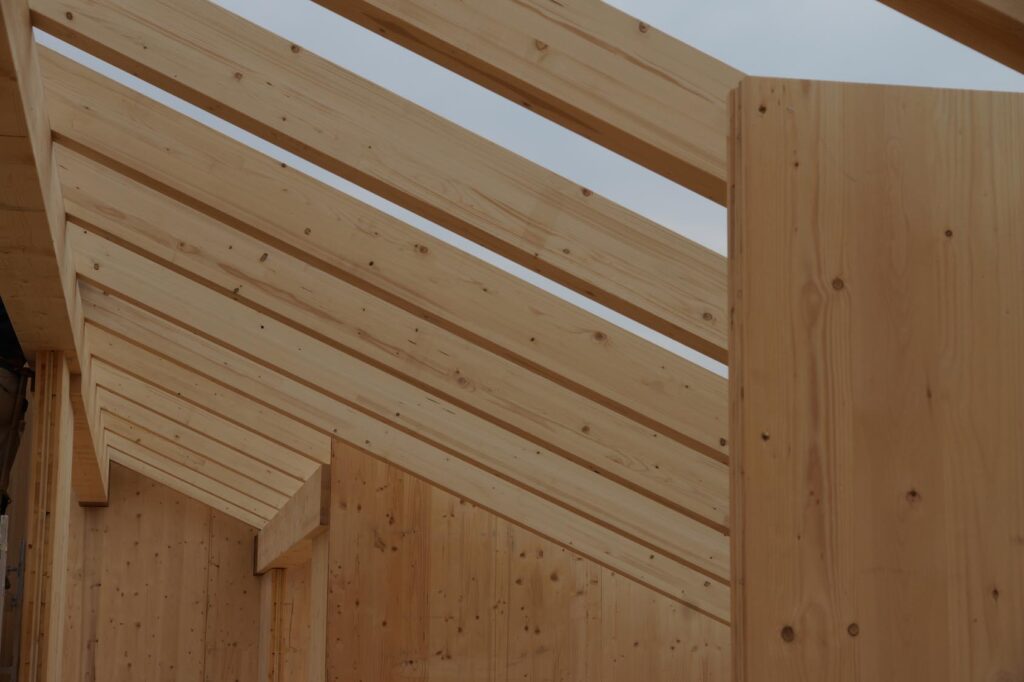
Wooden constructions offer a perfect combination of environmental, economic, and living comfort benefits. In this article, we want to focus on the economic advantages of Xlam constructions.
The construction cost of a structure made in Xlam is an almost certain cost: every aspect of production is evaluated during the design phase to minimize time and, consequently, the costs of on-site phases. Additional expenses are minimal, if not nonexistent, since the project is presented and provided with extreme precision even before the start of the work.
Properly designed, wooden structures offer numerous advantages, including speed of construction; the design, construction, assembly, and delivery times of a wooden structure are considerably shorter, especially when compared to a similar structure made of concrete. Average construction times in Xlam can be reduced by up to 50%, saving on labor costs, financial charges, business management, and allowing the building to be available much sooner.
Characteristics of Wood
Wood is a resistant yet ductile and lightweight material; it offers stability and solidity characteristics even better than traditional constructions. Its ductility allows maximum compositional freedom for the designer, who can create spaces tailored to the client’s needs.
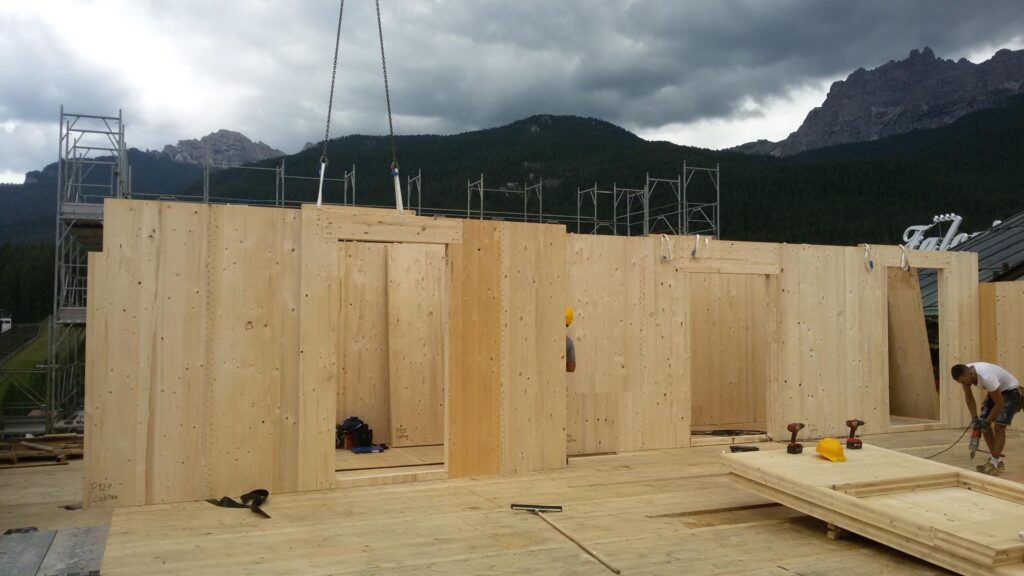
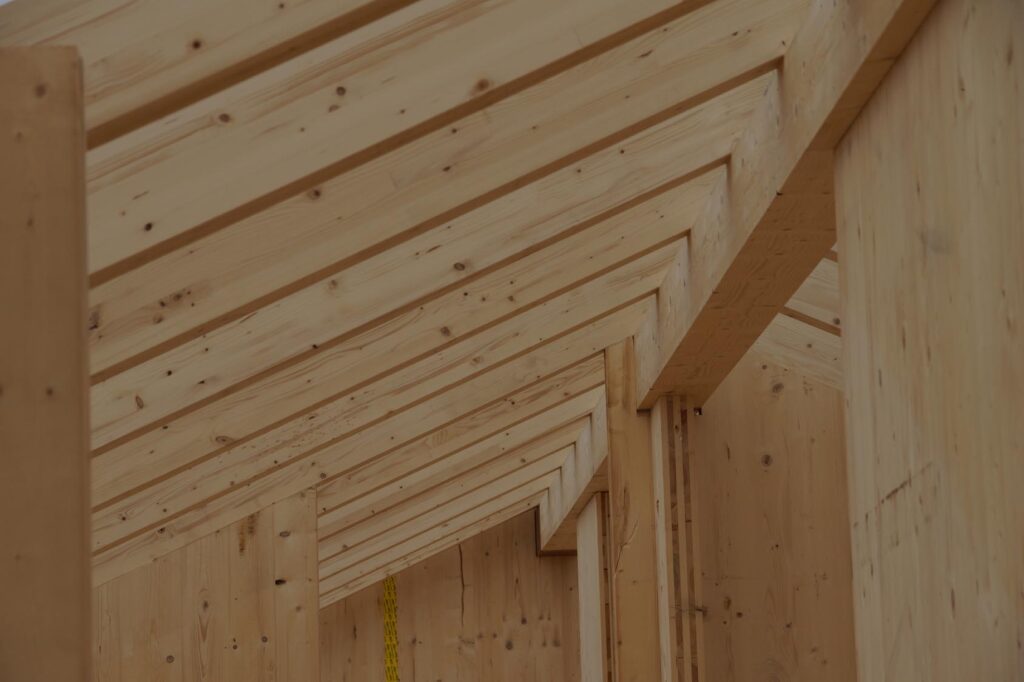
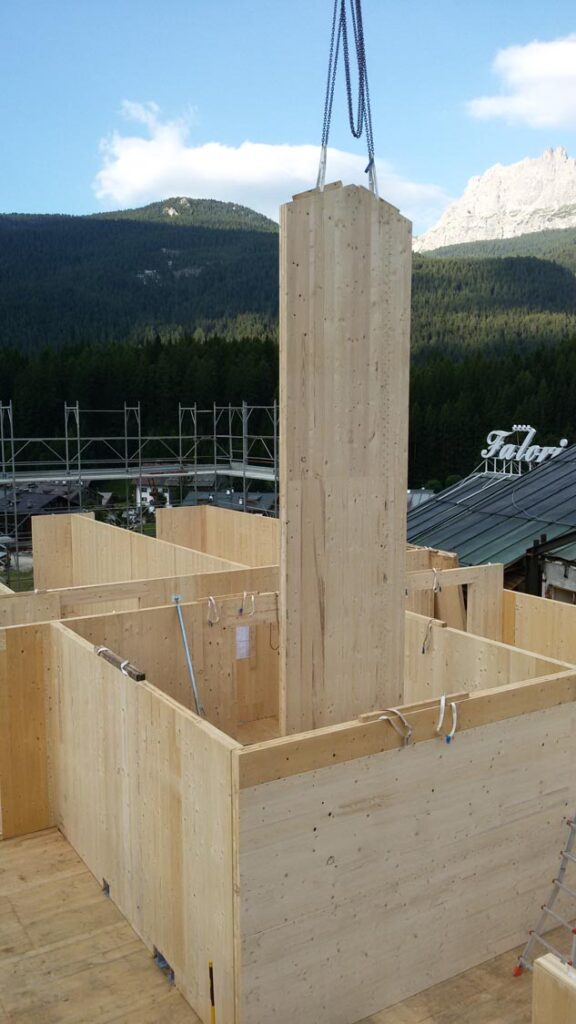
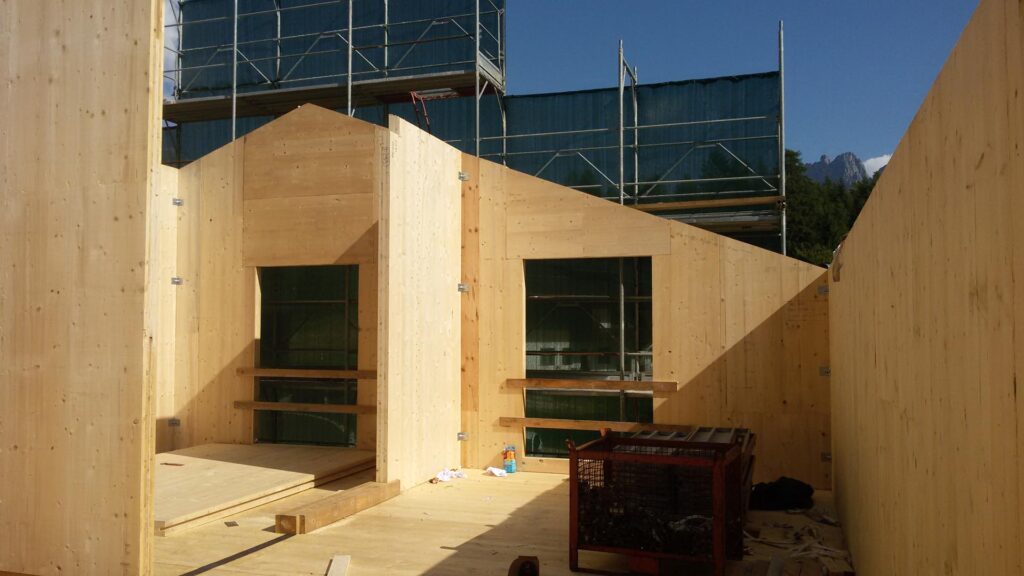
The extremely short construction times can be justified thanks to:
-
- Design flexibility: The versatility of wood allows the creation of complex and customized structures, and projects can be quickly adapted to the specific needs of the client.
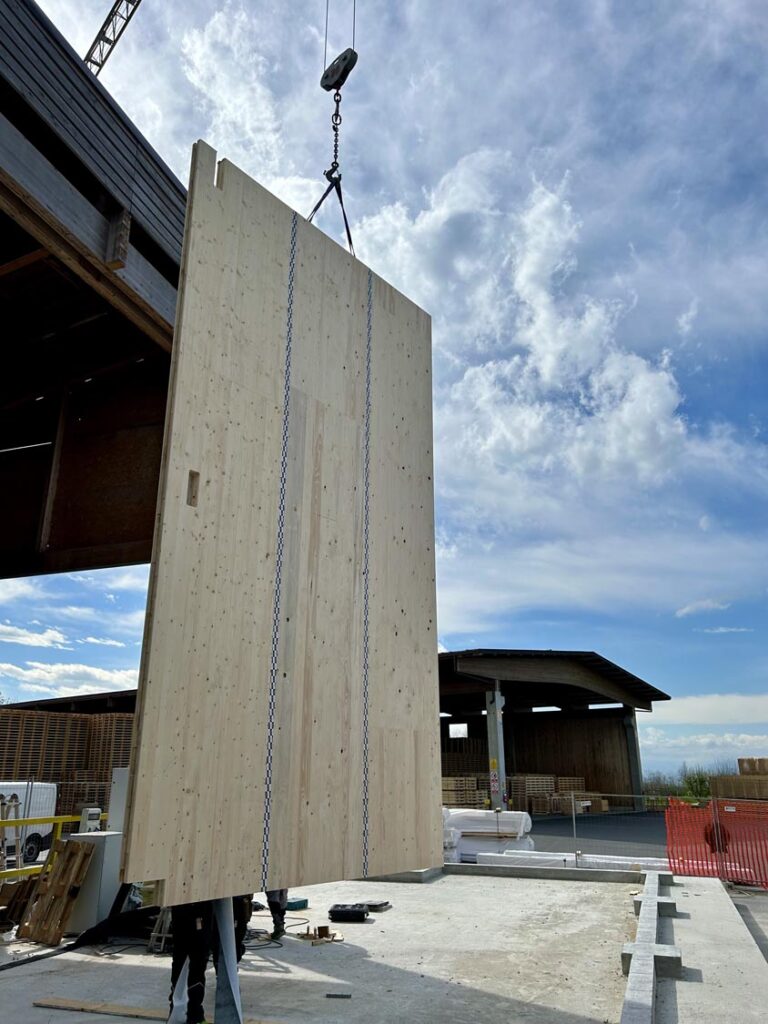
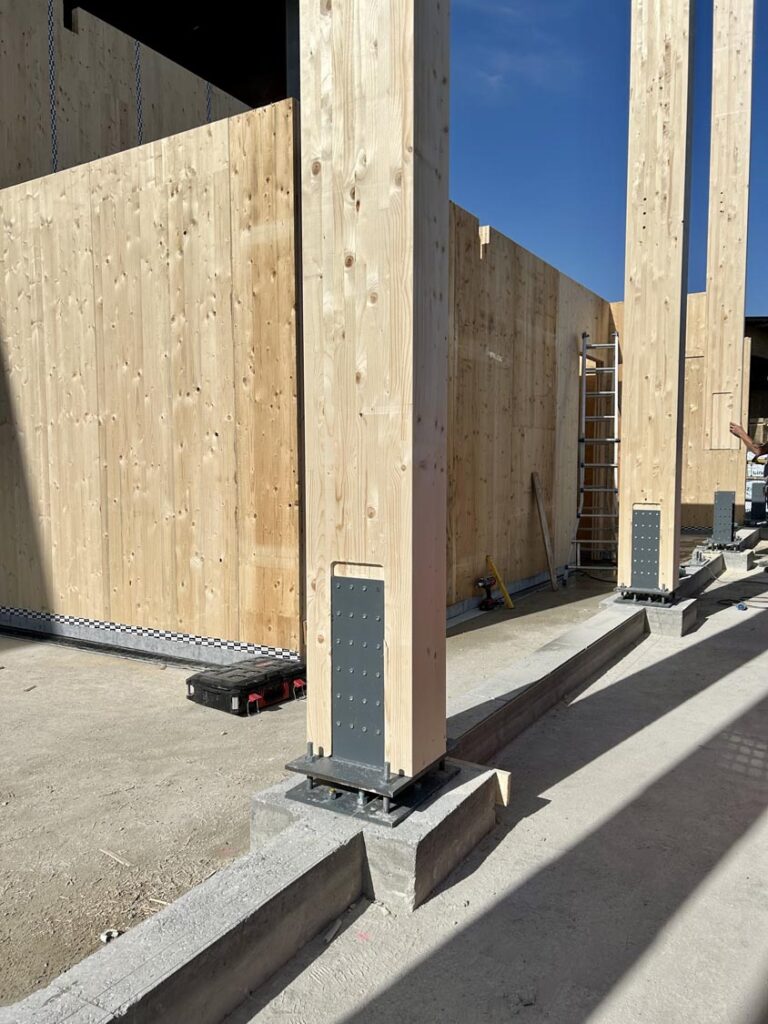
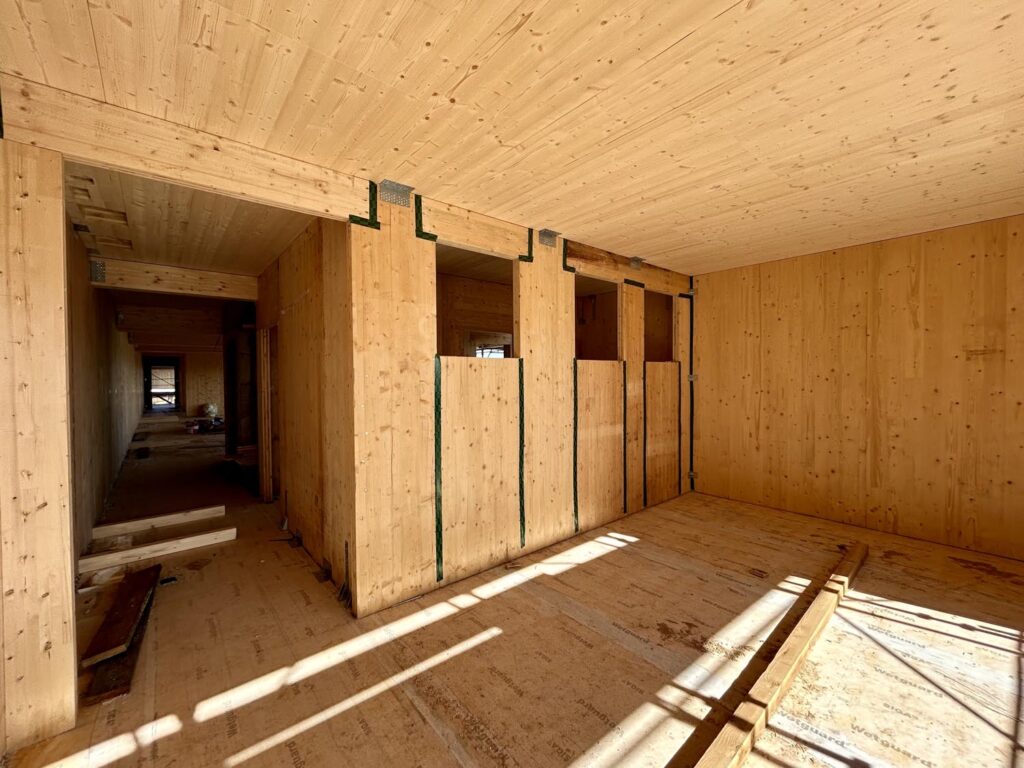
- Prefabrication: Structural wooden elements can be prefabricated; this means that beams, panels, and other components are assembled in a controlled environment, reducing on-site construction time. Since these elements are made within the company facility by specialized labor that optimizes the work plan, site management becomes faster and more streamlined.
- Quick assembly: Thanks to the lightness of wood, transport and assembly are faster compared to heavier materials like reinforced concrete. Each element is easily transportable and manageable on-site.
- Organized work environment: The absence of concrete pours and, generally, water and inert materials, allows the workspace to remain cleaner and more orderly, facilitating better organization of the different work phases. Shorter construction times also benefit workplace safety: the shorter the site, the lower the risk of accidents.
- Shorter drying time: Wood requires less time to dry compared to concrete, allowing subsequent construction phases to start more quickly.
It is important to note that speed does not compromise quality: all work is carried out with maximum precision, incorporating the best technologies to perfectly combine craftsmanship and innovation.
Therefore… lower financial outlay and shorter execution time inevitably lead to a rapid return on investment and, consequently, new funds to reinvest!